It is 11:40 at night. A patient sends your clinic a WhatsApp message: “Laser hair removal ka price kya hai? Kal ka time mil sakta hai?” Your receptionist went home at 8. By the time someone replies the next morning, the patient has already booked with the clinic that answered first.
This is the problem an AI receptionist solves. It is AI software for doctors and clinics that answers patient messages and calls 24/7, books appointments, sends reminders and passes the right cases to your staff. This guide explains what an AI receptionist for clinics does, what it should never do, what it costs, and how to set one up in 7 days.
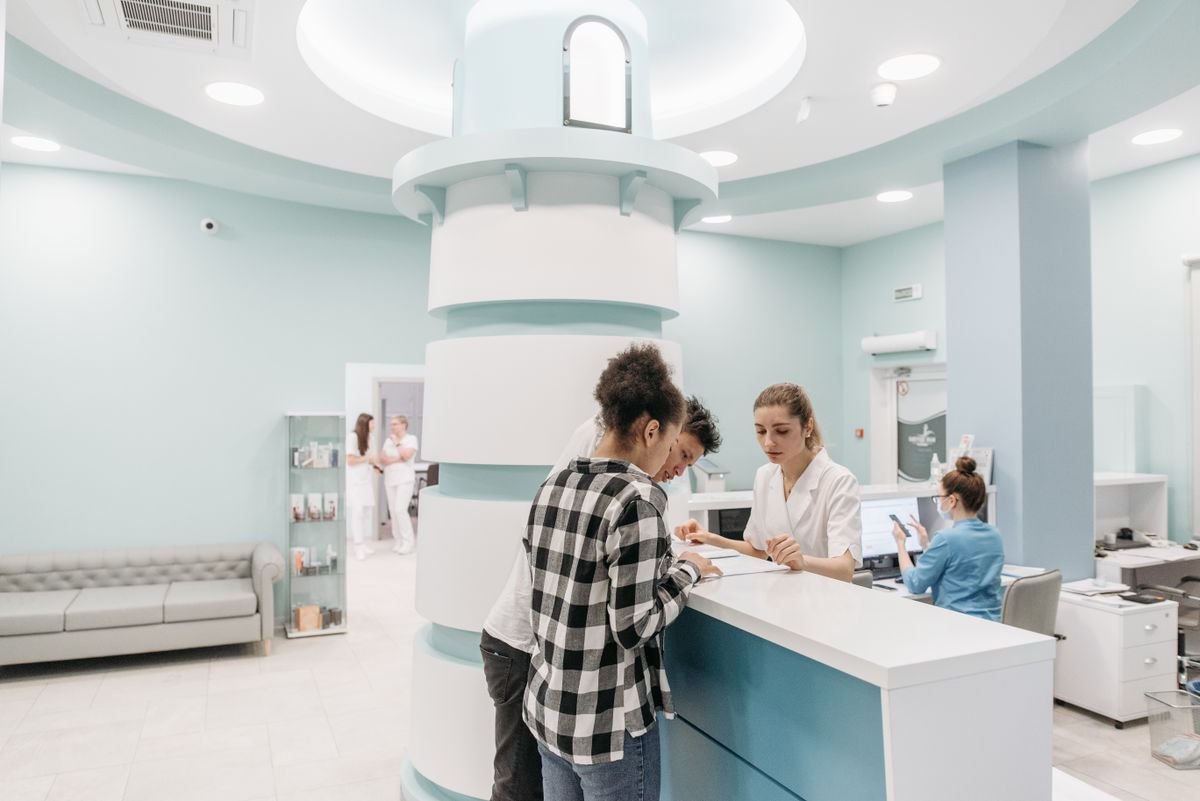
What Is an AI Receptionist for Clinics?
An AI receptionist (also called an AI front desk or virtual medical receptionist) is software that handles the routine front-desk work of a clinic on WhatsApp, Instagram, Facebook, your website chat and, in some setups, phone calls. It understands normal patient questions in English, Urdu and Roman Urdu, replies in seconds, and saves every enquiry in your clinic CRM.
It does not replace your doctor or your staff. It takes the repetitive questions off their hands so that no patient waits and no enquiry is forgotten.
What an AI Receptionist Does for Doctors
- Replies 24/7 in seconds to questions about timings, location, fees, doctors and services.
- Books, confirms and reschedules appointments using your real available slots.
- Sends reminders a day before and a few hours before each visit to reduce no-shows.
- Follows up with patients who asked about a price but did not book.
- Texts back missed calls automatically so callers are not lost. See missed call text back for clinics.
- Collects details (name, phone, treatment of interest) and saves them in the CRM.
- Sends aftercare instructions and review requests after the visit.
- Hands over to a human when the patient asks something medical, is unhappy, or wants to speak to staff.
What an AI Receptionist Must Never Do
Patient safety comes first. A good medical AI receptionist is set up with clear limits:
- It never diagnoses, suggests medicines or gives treatment advice.
- For anything urgent (chest pain, breathing trouble, heavy bleeding, severe pain), it tells the patient to call the clinic or go to the nearest emergency department immediately.
- It passes medical questions to the doctor or nurse.
- It keeps patient information private and only collects what is needed to book.
If a vendor says their AI “gives medical advice”, walk away.
AI Receptionist vs Human Receptionist vs Answering Service
| AI receptionist | Human receptionist | Medical answering service | |
|---|---|---|---|
| Available | 24/7, including holidays | Office hours | Usually 24/7 for calls |
| Reply speed | Seconds | Minutes to hours when busy | Minutes |
| Handles many chats at once | Yes | No | Limited |
| Books into your calendar | Yes, automatically | Yes, manually | Usually takes a message |
| WhatsApp and Instagram | Yes | Yes, when free | Usually calls only |
| Empathy and complex cases | Hands over to staff | Best | Limited |
| Monthly cost | Low and fixed | A full salary | Per call or per month |
The best setup for most clinics is both: the AI receptionist handles speed, volume and after-hours, while your human receptionist handles walk-ins, payments and sensitive conversations. For the difference between a simple chatbot and a full AI receptionist, read AI chatbot vs AI receptionist for clinics.
Why Clinics Need AI Front Desk Software in 2026
- Patients message, they do not call. Most new enquiries now arrive on WhatsApp and Instagram, often late at night.
- The first clinic to reply usually wins. Patients message 2 or 3 clinics and book with whoever answers first.
- Missed calls and late replies are invisible losses. Nobody counts the patients who never came back.
- No-shows waste doctor time. Automatic reminders and easy rescheduling fill more slots.
Free tool
How much are missed calls costing you?
Use our free calculator to see what missed calls and late replies cost your clinic every month.
Calculate my loss →10 Features to Look For in an AI Receptionist
- Works on WhatsApp (official WhatsApp Business API, not unofficial tools that get numbers banned).
- Understands English, Urdu and Roman Urdu.
- Uses your real clinic information: doctors, timings, fees, location, services.
- Books into a real calendar and avoids double booking.
- Appointment reminders with confirm and reschedule options.
- Human handover with one tap, and alerts to staff.
- Clinic CRM that saves every lead and conversation. See clinic CRM software.
- Safety rules: no diagnosis, emergency redirect, privacy.
- Reports: enquiries, bookings, response time, no-shows.
- Local support from people who understand clinics.
AI Receptionist Cost: What You Actually Pay For
The AI receptionist cost for a clinic usually has four parts:
| Cost part | What it covers | Who you pay |
|---|---|---|
| Setup | Training the AI on your clinic, connecting WhatsApp, calendar and CRM | Your provider (some include it free) |
| Monthly service | Running, updating and monitoring the AI receptionist | Your provider |
| WhatsApp messages | Replies to patients who message you within 24 hours are free; reminders and follow-ups you start are charged per message by Meta (a few rupees for a reminder, more for a promotional message) | Meta, through your WhatsApp account |
| Phone line (optional) | Only if you want the AI to answer voice calls | Your telecom or voice provider |
At Adymizing, the AI front desk is included in our Clinic Patient Engine for Rs 35,000 per month with no setup fee, together with a clinic CRM, website, Google Business Profile setup, reels and ads management.
How to Set Up an AI Receptionist in 7 Days
| Day | What happens |
|---|---|
| Day 1 | Collect clinic information: doctors, timings, fees, services, FAQs, location |
| Day 2 | Connect the official WhatsApp Business API and your CRM |
| Day 3 | Write the AI rules: tone, languages, what it can and cannot answer, handover cases |
| Day 4 | Connect the appointment calendar and reminder messages |
| Day 5 | Test with 30+ real-style questions, including tricky and urgent ones |
| Day 6 | Train staff on handover, the inbox and the CRM |
| Day 7 | Go live, then review conversations daily for the first two weeks |
Common Mistakes Clinics Make
- Letting the AI answer medical questions instead of handing them to the doctor.
- Using unofficial WhatsApp bulk tools, which get the clinic number banned.
- Never updating the AI when fees or timings change.
- No human checking conversations in the first weeks.
- Buying an AI receptionist without a CRM, so leads are answered but never followed up.
Want to go further? Read our guides on online appointment booking, WhatsApp marketing for clinics and how to reduce patient no-shows.
Get a 24/7 AI receptionist for your clinic
Our Clinic Patient Engine includes an AI front desk that replies in under a minute, books appointments and sends reminders, plus a clinic CRM, website and ads management. Live in 7 days.
Frequently Asked Questions
What is an AI receptionist for doctors?
It is AI software that answers patient messages and calls 24/7, books and confirms appointments, sends reminders and hands medical or sensitive questions to clinic staff.
Can an AI receptionist reply in Urdu?
Yes. A well-trained AI receptionist can understand and reply in English, Urdu and Roman Urdu, which is how most patients write on WhatsApp.
Will an AI receptionist replace my clinic staff?
No. It handles routine questions, bookings and reminders so your staff can focus on patients at the clinic. Medical questions and complaints always go to a human.
How much does an AI receptionist cost?
It depends on setup, the monthly service and WhatsApp message charges. Adymizing includes an AI front desk in the Clinic Patient Engine for Rs 35,000 per month with no setup fee.
Is an AI receptionist safe for medical clinics?
Yes, if it is set up with clear rules: no diagnosis or medicine advice, emergency cases directed to call or visit emergency care, a human handover option and private handling of patient information.